Fall is my favorite time of year in Kentucky. The weather cools down and the trees begin to change color, changing boring drives into spectacular view after spectacular view. I never thought anything could compare to a Kentucky fall. I was wrong.
Marburg is a city of tree covered hills. The hills are extremely steep so when you look from the city center, you see nothing but a rainbow of trees around you. In addition, many city paths lead you on golden trails, covered with freshly fallen leaves. The effect can literally force your mouth from a smile to a frown. I posted some of these pictures on facebook. You can see the photos from the public link below.
http://www.facebook.com/album.php?aid=2477929&l=f5b2e&id=1920556
As I told one friend earlier this week. "Don't hate me because Marburg is beautiful!" ;-)
Sunday, October 26, 2008


Friday, October 17, 2008
First doctor's visit
I had my first experience at a German doctor this week. For the last few weeks I've felt a bit (or more) out of sorts. I've had nausea, but I never threw up. I've had stomachaches, but nothing that kept me awake at night. But after changing my diet, sleeping more, and avoiding spicy foods, the symptoms continued. So I said to myself, "if the symptoms persist for one more week, I will go to the doctor".
I said that 4 weeks ago.
After one week, I still didn't feel better, so I said, I'll go to the doctor tomorrow, after I look up the German word for nausea (der Brechreiz). The next day, I woke up and felt bad, but I said, I don't know remember the word for stomach (der Magen) so I can't go yet. The next day I woke up and said, I have an essay due next week, so I don't have time to go to the doctor. On the fourth day, I realized that I forgot the word for nausea (hasn't changed, still der Brechreiz), so I didn't go. You get the idea. I kept finding reasons that I couldn't go to the doctor.
Now in the US, everyone gives reasons on why they should not to go to the doctor, but trying to go to the doctor in a foreign country is a completely different issue. For one, you have no idea where to find a doctor, and if you do find a doctor, how do you know that the doctor is good? Does your host country have high standards for doctors? Second, you find a doctor, but you end up misdiagnosed because either you don't explain your symptoms well enough in the local language or your doctor doesn't understand English as well as he/she thinks. Third, and probably the most intimidating is, how am I supposed to pay?
For me, the answer to the doctor and language questions were easily answered, I just contacted another Fulbright fellow who had already visited an English speaking doctor in town. The third question was also easy, the German Fulbright Kommission bought private health insurance for all Fulbright fellows. Since private insurance covers all none pre-existing conditions all I had to do was show my letter of insurance.
But the process was intimidating. It was hard enough for me to find the courage to visit the doctor, even though most of my questions were answered. I can not imagine the fear in a new immigrant when faced with illness. How do they know who to trust? How will they pay? How will they explain their symptoms when they can barely order bread at the supermarket without making grammatical mistakes? What if they say the pain is in their toe when they meant to say their hip hurts? At the very least, the Fulbright experience thus far has given me the opportunity to understand some of the struggles facing people new to a country, which I know will affect my decisions in the future.
As for the doctor's appointment. I finally visited the doctor this past Monday. After some tests, the doctor (fluent in English), gave me some medicine and scheduled another appointment for the following Monday. The medicines have not helped yet but I'm holding out hope that they will. I will update with more information as I have it.
I said that 4 weeks ago.
After one week, I still didn't feel better, so I said, I'll go to the doctor tomorrow, after I look up the German word for nausea (der Brechreiz). The next day, I woke up and felt bad, but I said, I don't know remember the word for stomach (der Magen) so I can't go yet. The next day I woke up and said, I have an essay due next week, so I don't have time to go to the doctor. On the fourth day, I realized that I forgot the word for nausea (hasn't changed, still der Brechreiz), so I didn't go. You get the idea. I kept finding reasons that I couldn't go to the doctor.
Now in the US, everyone gives reasons on why they should not to go to the doctor, but trying to go to the doctor in a foreign country is a completely different issue. For one, you have no idea where to find a doctor, and if you do find a doctor, how do you know that the doctor is good? Does your host country have high standards for doctors? Second, you find a doctor, but you end up misdiagnosed because either you don't explain your symptoms well enough in the local language or your doctor doesn't understand English as well as he/she thinks. Third, and probably the most intimidating is, how am I supposed to pay?
For me, the answer to the doctor and language questions were easily answered, I just contacted another Fulbright fellow who had already visited an English speaking doctor in town. The third question was also easy, the German Fulbright Kommission bought private health insurance for all Fulbright fellows. Since private insurance covers all none pre-existing conditions all I had to do was show my letter of insurance.
But the process was intimidating. It was hard enough for me to find the courage to visit the doctor, even though most of my questions were answered. I can not imagine the fear in a new immigrant when faced with illness. How do they know who to trust? How will they pay? How will they explain their symptoms when they can barely order bread at the supermarket without making grammatical mistakes? What if they say the pain is in their toe when they meant to say their hip hurts? At the very least, the Fulbright experience thus far has given me the opportunity to understand some of the struggles facing people new to a country, which I know will affect my decisions in the future.
As for the doctor's appointment. I finally visited the doctor this past Monday. After some tests, the doctor (fluent in English), gave me some medicine and scheduled another appointment for the following Monday. The medicines have not helped yet but I'm holding out hope that they will. I will update with more information as I have it.
Tuesday, October 7, 2008
paperwork and blah
I feel like I've been in a fog ever since I returned from Austria. For one, I was completely exhausted after the trip so it took a few days to recover. Second, all the Fulbrights left last week so I've been at a loss as to what I should do for fun. Third, Marburg has been under fog or rain for most of the last week. Because of the fog, I have a very very very difficult time waking up in the morning, which means when I do wake up (typically 2-3 hours later than I intended), I ended running around like crazy to get to place I wanted to be at 2 hours earlier. It stinks. (and my room stank for a little while after I spilled some machiato flavored soy milk on a pair of slippers, it took me 3 days to figure out the cause of the smell, phletcht)
In addition, my days have been rather boring. The highlight of the last 4 days was going to the registration office in the middle of town (20 min bus ride each way) to try to find Frau H., the Foreign student person (secretary, adminstrator, your guess is as good as mine). The first two times I visited the office with Frau H's name on the door, I was told (in german of course) that Frau H. was in orientation. When Frau H. returned, she would be in the office next door, the office with someone else's name on it. I tried to ask what day Frau H would return only to receive no response. The third time, I visited the office that did not have Frau H's name on the door. I start shoving paperwork in her hands and she looks at me like...what are you doing here? I show her my acceptance letter and said, I am new. She looks at me and says (in german of course), you need to visit Frau H, who is in the office with her name on it. My german skills were not too the point that I could explain that I went to her office because the person in Frau H's office told me that Frau H would be in the office without Frau H's name on it. Thus, she looked at me like I couldn't read (I can read a little German) or I was a rude American (I try hard not to live up to the stereotype).
So, I left the 'wrong' office to stand outside the office for Frau H. The door opens and out walks the lady who told me that I needed to go to the office next door. Guess who this lady is, its none other than Frau H! Frau H was in her office the whole time! The lady should be glad that my German was not good enough to start explaining my grieviences. Plus, I'd spent over 2 hours in the last week trying to finish this paperwork, so at this point I just wanted to finish the paperwork and get back to my room to shower (I woke up late, again, so I had to rush out of my room before showering) and then return to lab. After 10 minutes, my accounts were arranged and I finally received my semester ticket, which enables me to travel all over Hesse (including Kassel and Frankfurt) for free. :-)
So, that's how boring my life is right now. The highlight is succesfully filing my German university paperwork. Now that I have my semester ticket (and money in my German bank account), I can travel. Anyone want me to come visit? (preferably on the European continent)
In addition, my days have been rather boring. The highlight of the last 4 days was going to the registration office in the middle of town (20 min bus ride each way) to try to find Frau H., the Foreign student person (secretary, adminstrator, your guess is as good as mine). The first two times I visited the office with Frau H's name on the door, I was told (in german of course) that Frau H. was in orientation. When Frau H. returned, she would be in the office next door, the office with someone else's name on it. I tried to ask what day Frau H would return only to receive no response. The third time, I visited the office that did not have Frau H's name on the door. I start shoving paperwork in her hands and she looks at me like...what are you doing here? I show her my acceptance letter and said, I am new. She looks at me and says (in german of course), you need to visit Frau H, who is in the office with her name on it. My german skills were not too the point that I could explain that I went to her office because the person in Frau H's office told me that Frau H would be in the office without Frau H's name on it. Thus, she looked at me like I couldn't read (I can read a little German) or I was a rude American (I try hard not to live up to the stereotype).
So, I left the 'wrong' office to stand outside the office for Frau H. The door opens and out walks the lady who told me that I needed to go to the office next door. Guess who this lady is, its none other than Frau H! Frau H was in her office the whole time! The lady should be glad that my German was not good enough to start explaining my grieviences. Plus, I'd spent over 2 hours in the last week trying to finish this paperwork, so at this point I just wanted to finish the paperwork and get back to my room to shower (I woke up late, again, so I had to rush out of my room before showering) and then return to lab. After 10 minutes, my accounts were arranged and I finally received my semester ticket, which enables me to travel all over Hesse (including Kassel and Frankfurt) for free. :-)
So, that's how boring my life is right now. The highlight is succesfully filing my German university paperwork. Now that I have my semester ticket (and money in my German bank account), I can travel. Anyone want me to come visit? (preferably on the European continent)
Monday, September 29, 2008
Quick recap of my birthday and Austria
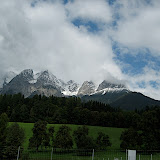
Last Friday I had an amazing opportunity to celebrate my birthday in the Austrian Alps. After sitting through a quantum chemistry lecture in German on Friday morning, I decided to skip out on two sessions of talks to explore the hiking trails around the city. After 1.5 hours of hiking uphill, I reached a trailhead. As much as I yearned to explore more, I knew that I needed to return to the conference, so I snapped a few pictures and then walked back down to the conference site.
I sat through a few more hours of conference that day, then left for the Conference excursion to Dachstein Sky Walk, a restaurant and sky walk located 2700m (nearly 9000 feet) above sea level. When we arrived, the entire area was indunated with snow, so my hopes of seeing an alphine sunset were quickly diminished. However, I took the time to enjoy the snow and test out the winterproofness of my new jacket by falling in the snow a few times. I took the time to make a fun video showing my Wurzburg companions and I exploring new and exciting ways to fall in the snow.
I snapped a lot of pictures over the weekend and posted the best ones to my picassa site.
I hope you enjoy the photos and video!
I sat through a few more hours of conference that day, then left for the Conference excursion to Dachstein Sky Walk, a restaurant and sky walk located 2700m (nearly 9000 feet) above sea level. When we arrived, the entire area was indunated with snow, so my hopes of seeing an alphine sunset were quickly diminished. However, I took the time to enjoy the snow and test out the winterproofness of my new jacket by falling in the snow a few times. I took the time to make a fun video showing my Wurzburg companions and I exploring new and exciting ways to fall in the snow.
I snapped a lot of pictures over the weekend and posted the best ones to my picassa site.
 |
| Austria - STC 2008 |
I hope you enjoy the photos and video!
Thursday, September 25, 2008
be afraid or be wrong
Or...don't be afraid to be wrong. I've noticed that I have two choices while studying here in Germany, I can speak in German and probably say something wrong, or I can be afraid of making a mistake. My mood fluctuates between the two. Sometimes I spend 10 minutes trying to come up with the grammatically correct sentence only to see the person walk away before I can use it. Other times I just blurt out a sentence that makes the German speakers go "huh?". When I think about what I just tried to say, even I go "huh?" I am afraid because I don't want to be labeled an idiot, but if I don't speak, I could possibly be labeled as rude.
This week is the first week that I've been completely surrounded by Germans. The last 6 weeks I've had the ability to fall back into American English with other Fulbrighters. At this conference, the official language is English (ironic considering that the conference is a meeting of German speaking countries) but most people slip back to German during breaks and lunches. Sometimes I understand the German but most of the time I understand about 25% of what they say (similar to my understanding of all the current theoretical talks). If you've ever been to a conference with me, you know that I love to use breaks to network. I smile and make sure that I talk to all the interesting speakers that I meet (which leads to very exciting opportunities). At this conference, I'm often too intimidated by the German (and quantum chemistry) language of the speakers to say anything more than hello.
German, like scientific research, requires that you make a lot of mistakes before things turn out right.
After two days of this behavior I'm sick and tired of it. Why am I so afraid to look like a fool? For my research, its in my best interest to ask as many questions as possible, even if they are extremely simple. Its so much better to look like a fool now when I'm just learning the subject than look like a fool when I try to give my defense. For German speaking, I'm the only person who thinks that I should be fluent in German quantum chemical terms.The language of science is English, so I've had to remind myself that its okay to speak English with other scientists. I also can not expect myself to speak perfect German (or Quantum) after just short study. So I have to overcome my natural shyness (yes, believe it or not, I am naturally shy) and start making mistakes. So today, I stopped forcing myself to talk only in German and embraced my natural desire to network. So far, nothing amazing has happened other than I don't feel as stressed out, but I'll keep you updated if a Nobel Laureate invites me for tea. :-)
This week is the first week that I've been completely surrounded by Germans. The last 6 weeks I've had the ability to fall back into American English with other Fulbrighters. At this conference, the official language is English (ironic considering that the conference is a meeting of German speaking countries) but most people slip back to German during breaks and lunches. Sometimes I understand the German but most of the time I understand about 25% of what they say (similar to my understanding of all the current theoretical talks). If you've ever been to a conference with me, you know that I love to use breaks to network. I smile and make sure that I talk to all the interesting speakers that I meet (which leads to very exciting opportunities). At this conference, I'm often too intimidated by the German (and quantum chemistry) language of the speakers to say anything more than hello.
German, like scientific research, requires that you make a lot of mistakes before things turn out right.
After two days of this behavior I'm sick and tired of it. Why am I so afraid to look like a fool? For my research, its in my best interest to ask as many questions as possible, even if they are extremely simple. Its so much better to look like a fool now when I'm just learning the subject than look like a fool when I try to give my defense. For German speaking, I'm the only person who thinks that I should be fluent in German quantum chemical terms.The language of science is English, so I've had to remind myself that its okay to speak English with other scientists. I also can not expect myself to speak perfect German (or Quantum) after just short study. So I have to overcome my natural shyness (yes, believe it or not, I am naturally shy) and start making mistakes. So today, I stopped forcing myself to talk only in German and embraced my natural desire to network. So far, nothing amazing has happened other than I don't feel as stressed out, but I'll keep you updated if a Nobel Laureate invites me for tea. :-)
be afraid or be wrong
Or...don't be afraid to be wrong. I've noticed that I have two choices while studying here in Germany, I can speak in German and probably say something wrong, or I can be afraid of making a mistake. My mood fluctuates between the two. Sometimes I spend 10 minutes trying to come up with the grammatically correct sentence only to see the person walk away before I can use it. Other times I just blurt out a sentence that makes the German speakers go "huh?". When I think about what I just tried to say, even I go "huh?" I am afraid because I don't want to be labeled an idiot, but if I don't speak, I could possibly be labeled as rude.
This week is the first week that I've been completely surrounded by Germans. The last 6 weeks I've had the ability to fall back into American English with other Fulbrighters. At this conference, the official language is English (ironic considering that the conference is a meeting of German speaking countries) but most people slip back to German during breaks and lunches. Sometimes I understand the German but most of the time I understand about 25% of what they say (similar to my understanding of all the current theoretical talks). If you've ever been to a conference with me, you know that I love to use breaks to network. I smile and make sure that I talk to all the interesting speakers that I meet (which leads to very exciting opportunities). At this conference, I'm often too intimidated by the German (and quantum chemistry) language of the speakers to say anything more than hello.
German, like scientific research, requires that you make a lot of mistakes before things turn out right.
After two days of this behavior I'm sick and tired of it. Why am I so afraid to look like a fool? For my research, its in my best interest to ask as many questions as possible, even if they are extremely simple. Its so much better to look like a fool now when I'm just learning the subject than look like a fool when I try to give my defense. For German speaking, I'm the only person who thinks that I should be fluent in German quantum chemical terms.The language of science is English, so I've had to remind myself that its okay to speak English with other scientists. I also can not expect myself to speak perfect German (or Quantum) after just short study. So I have to overcome my natural shyness (yes, believe it or not, I am naturally shy) and start making mistakes. So today, I stopped forcing myself to talk only in German and embraced my natural desire to network. So far, nothing amazing has happened other than I don't feel as stressed out, but I'll keep you updated if anyone gives me a Nobel prize. :-)
This week is the first week that I've been completely surrounded by Germans. The last 6 weeks I've had the ability to fall back into American English with other Fulbrighters. At this conference, the official language is English (ironic considering that the conference is a meeting of German speaking countries) but most people slip back to German during breaks and lunches. Sometimes I understand the German but most of the time I understand about 25% of what they say (similar to my understanding of all the current theoretical talks). If you've ever been to a conference with me, you know that I love to use breaks to network. I smile and make sure that I talk to all the interesting speakers that I meet (which leads to very exciting opportunities). At this conference, I'm often too intimidated by the German (and quantum chemistry) language of the speakers to say anything more than hello.
German, like scientific research, requires that you make a lot of mistakes before things turn out right.
After two days of this behavior I'm sick and tired of it. Why am I so afraid to look like a fool? For my research, its in my best interest to ask as many questions as possible, even if they are extremely simple. Its so much better to look like a fool now when I'm just learning the subject than look like a fool when I try to give my defense. For German speaking, I'm the only person who thinks that I should be fluent in German quantum chemical terms.The language of science is English, so I've had to remind myself that its okay to speak English with other scientists. I also can not expect myself to speak perfect German (or Quantum) after just short study. So I have to overcome my natural shyness (yes, believe it or not, I am naturally shy) and start making mistakes. So today, I stopped forcing myself to talk only in German and embraced my natural desire to network. So far, nothing amazing has happened other than I don't feel as stressed out, but I'll keep you updated if anyone gives me a Nobel prize. :-)
Monday, September 22, 2008
Sprachkurs ist fertig!
I completed my language and culture course requirements today!
3 page long essay on German extremism - done
language test - done
language proficiency - still working on it
poster for Austria conference - done
packing for conference - done
sleeping - um...can I sleep in the car?
It feels weird to say that I've finished the first hurdle of my time in Germany. I now only have 90% of my time in Germany remaining. Wow, time flies fast. I know that I've learned a lot of German, but I still lack fluency. I can carry on simple conversations, but once the conversation moves to more complicated terms (read, anything that is not my family, weather, or where I'm from), then I become quickly confused. If the conversation contains a preposition or past participle, then my mind starts to explode.
But in reality, I've learned that German is not all that different than English. Sure, German uses specific words to indicate direct and indirect objects while English relies on word order, but the fact remains that the Germans still think in terms of direct and indirect objects. The idea behind the language is still the same. I just need to learn which preposition goes with what idea. i.e. uber dem Tisch versus auf dem Tisch...one indicates that the item is flying over the table and the other indicates the item is on the table. (Imagine the expression on a German's face when you say that the flowers flew over the the table.)
Learning German has also forced me to think about how I use my own language. I become frustrated with Germans because their verbs don't conjugate in a logical manner. But then I remember the verb....being.
I am
he, she, it is
he was
I was
they were
they are.....
There is not a trend, I just became accustomed to English phrasing so I never thought about strange conjugation. I have no reason to yell at Germans for creating a difficult language. English can be just as illogical, if not more so than German! I hope that as I hear German spoken around me, that I will eventually pick up on the correct forms of verbs, the correct prepositions, and the correct sentence structure (verb at the end!).
Perhaps in a few months time, English will seem just as odd and German will feel more natural.
P.S. - I visited McDonalds today. Sometimes I'm glad that a little piece of the US can be found in nearly every country you visit.
3 page long essay on German extremism - done
language test - done
language proficiency - still working on it
poster for Austria conference - done
packing for conference - done
sleeping - um...can I sleep in the car?
It feels weird to say that I've finished the first hurdle of my time in Germany. I now only have 90% of my time in Germany remaining. Wow, time flies fast. I know that I've learned a lot of German, but I still lack fluency. I can carry on simple conversations, but once the conversation moves to more complicated terms (read, anything that is not my family, weather, or where I'm from), then I become quickly confused. If the conversation contains a preposition or past participle, then my mind starts to explode.
But in reality, I've learned that German is not all that different than English. Sure, German uses specific words to indicate direct and indirect objects while English relies on word order, but the fact remains that the Germans still think in terms of direct and indirect objects. The idea behind the language is still the same. I just need to learn which preposition goes with what idea. i.e. uber dem Tisch versus auf dem Tisch...one indicates that the item is flying over the table and the other indicates the item is on the table. (Imagine the expression on a German's face when you say that the flowers flew over the the table.)
Learning German has also forced me to think about how I use my own language. I become frustrated with Germans because their verbs don't conjugate in a logical manner. But then I remember the verb....being.
I am
he, she, it is
he was
I was
they were
they are.....
There is not a trend, I just became accustomed to English phrasing so I never thought about strange conjugation. I have no reason to yell at Germans for creating a difficult language. English can be just as illogical, if not more so than German! I hope that as I hear German spoken around me, that I will eventually pick up on the correct forms of verbs, the correct prepositions, and the correct sentence structure (verb at the end!).
Perhaps in a few months time, English will seem just as odd and German will feel more natural.
P.S. - I visited McDonalds today. Sometimes I'm glad that a little piece of the US can be found in nearly every country you visit.
Subscribe to:
Posts (Atom)


